
Trusting God’s plan and purpose when all is falling apart
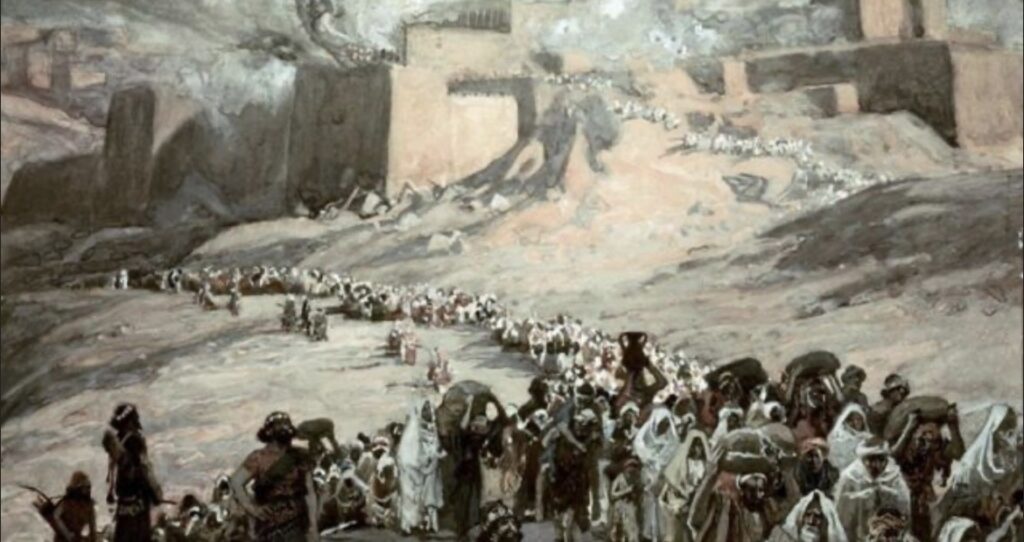
Daniel cites God giving over Jerusalem to the Babylonians
In the third year of the reign of Jehoiakim king of Judah, Nebuchadnezzar king of Babylon came to Jerusalem and besieged it. 2 And the Lord gave Jehoiakim king of Judah into his hand, along with some of the vessels of the house of God; and he brought them to the land of Shinar, to the house of his god, and he brought the vessels into the treasury of his god. – Daniel 1:1-2
Let this sink in of for a moment.
…And the Lord gave Jehoiakim king of Judah into his hand
Does this make God fickle, even evil?
This is taking one phrase of a sentence out of context, but if you understand the Scriptures as a whole, you’ll realize there is substantial truth contained in it. I having been studying and continually reading the Bible every day for about 5 years now, have engaged in 3 extensive Bible studies trough Bible Study Fellowship, have independently read through the Bible now 2.5 times (and continuing), listened to a variety of Bible scholars, in effort to understand God’s character, and have prayed that the Truth be revealed to me. That’s what helps me understand that God is not fickle, God is not evil, and the purposes of God having given over Jerusalem to a conquering gentile enemy has a much meaning for us today as part of the redemptive story God leaves for us.
I don’t tell you this to raise myself up as someone who is better than anyone else, I am not, but it’s an indication of the seriousness, through conviction of the Holy Spirit, I realized I needed to change to learn about Jesus Christ as my Lord and Master since I was brought to surrender to Christ. Once I realized I was a slave to many things by my freedom of choice, I could begin to see how my worldly choices lead me away from the Truth and the Savior who is also the Lord and Master, the Way, The Truth and the Life. He who is truth in Love.
That gravity of our unbelief and ignorance is not well emphasized in many churches and that helps sustain a kindergarten understanding of our sin in relation to the Holiness of God.
The inerrant Word of God is not merely another secular source of literature. We can grasp the key truths but with our best efforts only scratch the surface of the depth of God’s wisdom.
Back to the story of how the conquerors were nflucnd by Godly men. First there was much pain and chaos, when Judah’s King Jehoiakim’s son, Zedekiah, became king, but of a Judah that was under the control of Babylon.
And Zedekiah rebelled against the king of Babylon.4 Now it happened in the ninth year of his reign, on the tenth day of the tenth month, that Nebuchadnezzar king of Babylon came, he and all his military force, against Jerusalem, and they camped against it and built a siege wall all around [b]it. 5 So the city came under siege until the eleventh year of King Zedekiah. 6 On the ninth day of the fourth month, the famine was so strong in the city that there was no food for the people of the land. – Jeremiah 52:3-6
12 Now on the tenth day of the fifth month, which was the nineteenth year of King Nebuchadnezzar, king of Babylon, Nebuzaradan the captain of the bodyguard, who stood before the king of Babylon, came to Jerusalem. 13 And he burned the house of Yahweh, the king’s house, and all the houses of Jerusalem; even every large house he burned with fire. – Jeremiah 52: 12-13
28 These are the people whom Nebuchadnezzar took away into exile: in the [q]seventh year 3,023 Jews; 29 in the eighteenth year of Nebuchadnezzar 832 persons from Jerusalem;30 in the twenty-third year of Nebuchadnezzar, Nebuzaradan the captain of the guard took away into exile 745 Jewish people; there were 4,600 persons in all. – Jeremiah 52:28-30
3 Then the king said for Ashpenaz, the chief of his officials, to bring in some of the sons of Israel, including some of the royal seed and of the nobles, 4 youths in whom was no defect, who were good in appearance, showing insight in every branch of wisdom, being thoroughly knowledgeable and discerning knowledge, and who had ability to stand in the king’s palace – Daniel 1:3-4
Long story short, that’s how Daniel ended up in Babylon.

Truth extends far beyond our current circumstances, not unlike what Daniel was facing at the time of great suffering when the Babylonians overtook Jerusalem after a long and devastating siege before taking away the bulk of the Jews into captivity.
Many of you know the accounts of Daniel’s faithful witness to God and the ways that Daniel would not forsake despite being a subject of a foreign conqueror, in a foreign land, surrounded by foreign idolatrous customs.
In this history of Daniel and his companions, Hananiah, Mishael, and Azariah, we find an example of how we are called to endure and even thrive when circumstances seem out of control and not according to plan, and that’s putting it mildly in the case of Daniel and his friends.
In Jeremian 52, we learn about how and why Jerusalem and the Temple that had been built by King Solomon were destroyed by the Babylonians, the siege and destruction, horrific suffering and consequent capture and torture of King Zedekiah (you’ll need to read that for yourself) who rebelled against Nebuchadnezzar. It helps to keep in mind that the Prophet Jeremiah, who was treated very poorly by those in power because God’s message was that they will be overthrown and that they should surrender peaceably and receive mercy.
This was different that when the Prophet Isaiah encouraged King Hezekiah to stand up against the invading Assyrians about 116 years before (701 B.C.). Moreover, King Hezekiah was a good King who strove to obey God and reform Judah from idol worship. In that battle God fought for Israel, God deployed one angel who proceeded to destroy the Assyrian army of 185,000… in one night.
Zedekiah’s conscience was trying to warn him as he approached, in private, Jeremiah, who was under house arrest. Jeremiah, who loved his people, pleaded with the king not to rebel so he and his people would receive good treatment from Nebuchadnezzar. Jeremiah had been prophesying that Judah was facing judgment for their own long time disobedience and idolatry, would be taken into captivity but another generation would be restored to the Promised Land. But the King of Judah, under pressure from his entourage, did not obey God and heed His warnings given pleadingly through Jeremiah.
Zedekiah’s punishment turned out to be horrific (Jeremiah 52).
Nevertheless, God’s sovereign plan of the Jews being removed from the land was going as expected, and despite being held captive, the faithfulness of Daniel and his friends would be used for divine purpose and divine witness to the power of God, just as the Babylonians were used (as prophecied) as a force used for God’s judgment against Judah.
There’s so much to unpack regarding the breaking up of Israel during the time of the Assyrians and Babylonians, and their ultimate repatriation back to the Promised Land. It’s rich with divine meaning, prophecy, suffering, restoration and hope.
I want us to focus on Daniel, uprooted out of the land, people and culture. He was one of God’s faithful people, worshipping the One True God. Now his homeland destroyed, the royal family and officials massacred and he finds himself a captive in the far away idol-worshipping land.
How would you feel? What concerns would you have? How would you be expected to behave? What are your convictions when the world around you has been turned upside down? Do you just go along with the flow? To what degree? Are God’s promises still to be believed? Being in a foreign land, would you be free to break the rules of the Kingdom you are a citizen of?
Consider the analogy of a prisoner of war. The allegiance of a captured soldier, based on most Western philosophy, remains one of loyalty to the country one serves in uniform. It’s not expected that a prisoner simply collaborates with the enemy if doing do works against their home country or causes greater suffering to their fellow prisoners.
It would be rather difficult to maintain the dignity of one stripped out of his homeland, to remain true to the Kingdom he knows is true by both faith and conviction. Daniel served God. Daniel trusted God, the God who liberated his people from slavery in Egypt. Daniel trusted God because God had proven Himself trustworthy.
A Christian knows that all that is done in private, even our thoughts, is done with the Eternal and Omnipresent God as witness, no matter whether one is near to home or afar.
While we are called to be a good citizen as most of us understand citizenship, we as Christians belong to God’s eternal Kingdom which has both visible and invisible attributes. Certainly the eternal ones are invisible during our earthly lives, but like Daniel made captive and brought into service in Babylon, he remained a faithful servant to God despite the tragic circumstance of his transition.
A Christian understands that he belongs to the eternal kingdom and he is called to serve as God’s servant during his earthly life.
8 But Daniel set in his heart that he would not defile himself..” – Daniel 1:8. That is with the ways of the Babylonian pagans.
Daniel and his friends did well in Babylon as wise advisors faithful to God, but it was not without some epic turmoil. God delivered them in miraculous ways, a few which are recorded in the Book of Daniel.
17 If it be so, our God whom we serve is able to save us from the furnace of blazing fire; and He will save us out of your hand, O king. 18 But if not, let it be known to you, O king, that we are not going to serve your gods, and we will not worship the golden image that you have set up.” – Daniel 3:17-18
22 My God sent His angel and shut the lions’ mouths, and they have not harmed me, inasmuch as I was found innocent before Him – Daniel 6:22
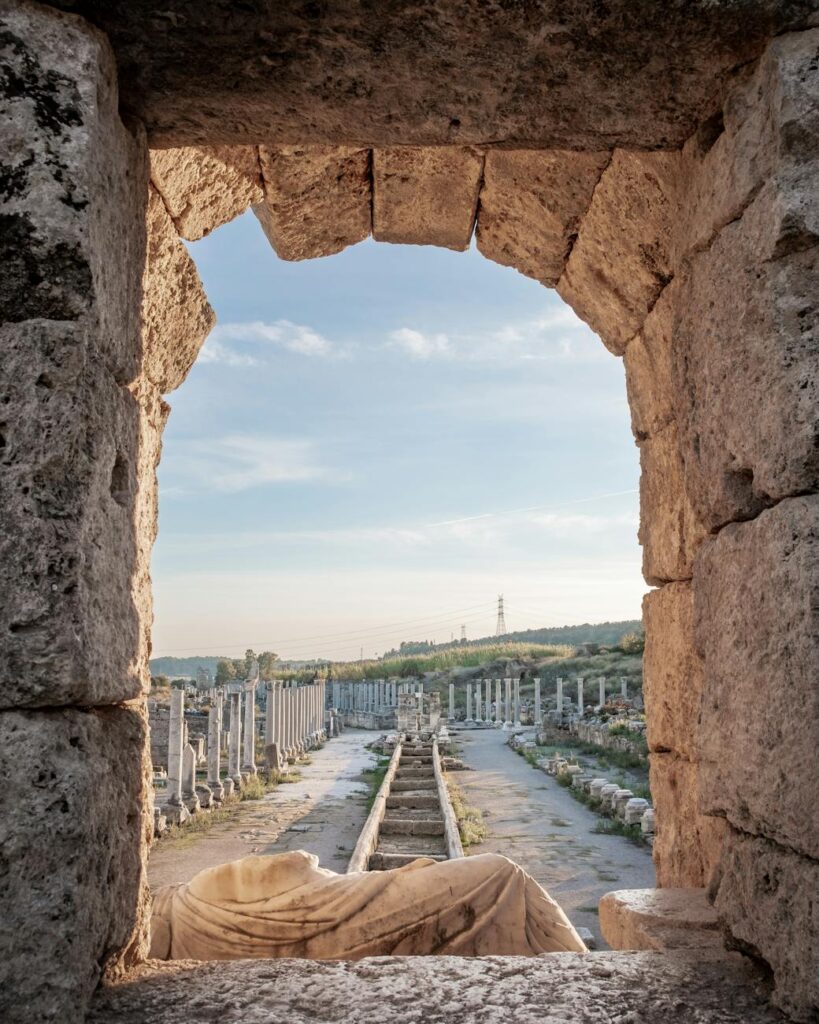
God’s influence through Daniel
Through Daniel, God brought the extraordinarily prideful King Nebuchadnezzar, who led a life of military successes and self-aggrandizement, over the course of decades to a very humble state, like an animal such that he “…was driven away from mankind and began eating grass like cattle, and his body was drenched with the dew of heaven until his hair had grown like eagles’ feathers and his nails like birds’ claws.
In other words, God taught the self-glorifying king who was boss.
34 “But at the end of those days, I, Nebuchadnezzar, lifted up my eyes toward heaven, and my knowledge returned to me, and I blessed the Most High and praised and honored Him who lives forever; – Daniel 4:33B-34A.
The great Babylonian King finally understood all that he had accomplished was only by the blessing of God.
Daniel’s influence ultimately received the favor of another pagan King blessed by God for the fulfillment of God’s sovereign purposes: Cyrus the Great, who commanded the Persian armies that conquered the Babylonians. Though it all, Daniel remained alive and influential even in the new empire’s court.

The Mission of a Christian
The divine mission of a Christian is to act as an emissary representing the Kingdom of God in this world. Although we all will struggle with our sinfulness, we are called through lives of obedient servanthood to exhibit God’s work in this world, to glorify God in our worship and through all the ways God blesses our lives, giving thanks and receiving his blessings in all circumstances.
When we embrace this understanding, the losses suffered in this life take on a different meaning and purpose for our lives (and for those around us), knowing that in our need and weakness, God helps fulfill and sustain us as we seek to serve God in all circumstances, continuing our worship of Him and giving Him all glory.
There is no loss that God cannot bring restoration from, for all that live with love for God.
We know that for those who love God all things work together for good, for those who are called according to His purpose. – Romans 8:28
And after you have suffered for a little while, the God of all grace, who called you to His eternal glory in Christ, will Himself restore, strengthen, confirm, and ground you. – 1 Peter 5:10
and these famous words of David, glorifying God in Psalm 23:
Even though I walk through the valley of the shadow of death,
I fear no evil, for You are with me;
Your rod and Your staff, they comfort me.
5 You prepare a table before me in the presence of my enemies;
You have anointed my head with oil;
My cup overflows. – Psalm 23:4-5
We take ownership, as sons and daughters of a Royal inheritance, resting in the assurance that God will ultimately provide for us in this life and the afterlife. After we die, the door opens for us to be received into heavenly glory without the weight of sin and pain, to be exalted into the presence of God’s love through Jesus Christ our Lord.

For a one minute explanation of the Gospel from the late Pastor John MacArthur, watch this video https://www.youtube.com/watch?v=LCP9UcC7BzE
For a review of the Ten Commandments: https://www.challenyee.com/the-ten-commandments/
All quoted excerpts have footnotes removed, usually from Legacy Standard Bible (LSB), sometimes from New International Version (NIV), on rare occasion the Amplified Bible (AMP).
Copyright © 2026 ChallenYee.com Some Rights Reserved
13 July 2024